Tag Archives: Novel

James Joyce – A Portrait of the Artist as a Young Man

Once upon a time and a very good time it was there was a moocow coming down along the road and this moocow that was coming down along the road met a nicens little boy named baby tuckoo…
    His father told him that story: his father looked at him through a glass: he had a hairy face.

    Mr King told them that story in A-Level English. Kinglish, it was called.
    Mr King gave them each a book. It was fat and red, and full of essays in the back. He circled every word that Mr King said was important, and he circled every word that he thought was important too, and wrote notes so that he would remember why they were important. There were more important words than unimportant words.

So ends my poor pastiche of the book’s opening pages. For a Portrait of the Artist as a Young Man is pretty inimitable, largely because the style poses a moving target. It evolves, develops, possibly overdevelops over the course of its 200 pages, moving from the tactile babble of a toddler to an expatiation on Aquinas and aesthetics. But after all, Stephen Dedalus is a complex hero (and the book’s working title was Stephen Hero), one whose self-possession and self-regard go counterwise to his family’s fortunes. He is acutely aware of his strange surname, and of the namesake that he has to live up to. And in a coincidence that would surely have delighted Joyce, I have just re-read Portrait, for the first time in ten years, in a copy bought from a man called Icaro. An Icarus sold me a book about a Dedalus.

Boarding school, as we know, is often barbarous. Boarding school in late Victorian Ireland sounds worse than the hell that its rectors and præfects invoked to terrorize their wards. The heart bleeds for the young boy who boards at Clongowes, who is caned for having broken glasses but who can’t have the curiosity beaten out of him:

It was very big to think about everything and everywhere. Only God could do that. He tried to think what a big thought that must be but he could only think of God. God was God’s name just as his name was Stephen. Dieu was the French for God and that was God’s name too; and when anyone prayed to God and said Dieu then God knew at once that it was a French person that was praying.

You probably wouldn’t describe this passage by the overused term ‘stream-of-consciousness’, but I would like to see the paragraph that more touchingly translated the innocent wonderings of a child. It’s almost as tearjerking as the thought that comes to him out on the football field: “Soon they would be going home for the holidays. After supper in the study he would change the number pasted up inside his desk from seventyseven to seventysix.”

But Christmas does come in a matter of pages, and it’s a fraught affair. Parnell has just died, and the family friend Mr Casey dares to lay his death at the door of the Irish priesthood, all in the presence of the devout Dante (Stephen’s infant pronunciation of “auntie”). The tension simmers, then boils over:

– God and religion before everything! Dante cried. God and religion before the world.
Mr Casey raised his clenched fist and brought it down on the table with a crash.
– Very well, then, he shouted hoarsely, if it comes to that, no God for Ireland!
– John! John! cried Mr Dedalus, shaking his guest by the coat-sleeve.

Even the Fenian-minded Mr Dedalus, who has sided with Mr Casey up till now, balks at the blasphemy. And Stephen, “raising his terrorstricken face, saw that his father’s eyes were full of tears.”

Simon Dedalus grows the more pitiful over the book’s five chapters, while Stephen grows only the more pitiless. They have a father-and-son jaunt to the ancestral home in Cork, a nostalgia trip for Dedalus père and a purgatorial one for fils. Puberty has hit: Stephen writhes in disdain and desire, and addresses the latter with a paid partner in the Dublin stews. Their overtures have a poetry all of their own, as the lights dim on Chapter Two. He “closed his eyes, surrendering himself to her, body and mind, conscious of nothing in the world but the dark pressure of her softly parting lips.”

Thus Chapter Three finds Stephen in mortal sin, a fact that is brought terrifyingly home to him when he attends a spiritual retreat with his school. The speaker expounds upon the nature of hell, containing “All the filth of the world, all the offal and scum of the world…a neverending storm of darkness, dark flames and dark smoke of burning brimstone, amid which the bodies are heaped one upon another without even a glimpse of air.” So far, so hellish, but it’s Joyce’s image of eternity – the length of the sinner’s sentence – that tests the resolve of even the most secular reader:

Now imagine a mountain of […] sand, a million miles high, reaching from the earth to the farthest heavens, and a million miles broad, extending to remotest space, and a million miles in thickness…and imagine that at the end of every million years a little bird came to that mountain and carried away in its beak a tiny grain of that sand. How many millions upon millions of centuries would pass before the bird had carried away even a square foot of that mountain, how many eons upon eons of ages before it had carried away all. Yet at the end of that immense stretch of time not even one instant of eternity could be said to have ended. At the end of all those billions and trillions of years eternity would have scarcely begun.

One critic reached the end of the sermon and wondered: “My God, what if it’s all true?”

I’m not going to spoil what follows, because I don’t want to give anyone a reason not to read the book for themselves. Certainly, anyone with ambitions of tackling Ulysses should tackle Portrait first, as it stars the same artist and young man, often forgotten for the novel’s other, more famous protagonist Leopold Bloom. Among the general reading public, it seems to me that Portrait has always got lost between two stools. Unlike Dubliners, it doesn’t attract the more timid reader; unlike Ulysses, it doesn’t appeal to the vanity of the show-offs. (Though compared to the equally undermentioned Finnegans Wake, on which I have made three fruitless attempts, Ulysses reads like The Old Man and the Sea).

I have four copies of A Portrait of the Artist as a Young Man, which chimes with Joyce’s commitment to omnivorous plurality. Martin Amis argued that he “doesn’t respect the reader enough”; that rather than welcome you into his world, he gives you the wrong address and then, when you finally locate his house, he leaves you sitting on his doorstep for hours until he finally turns up, reeking of alcohol, and then he can’t find his keys… That metaphor may be true of Joyce after Portrait, but it isn’t quite true of Portrait itself. The artist is too young to yet be a drunkard.

– Newcastle 2011
– Firenze 2021
by Harry Cochrane

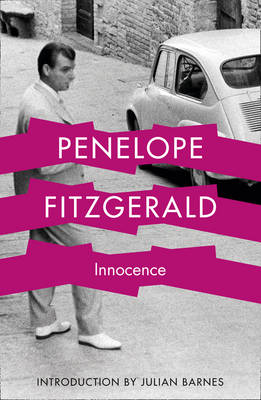
Penelope Fitzgerald – Innocence

Penelope Fitzgerald’s sixth novel Innocence (1986) concerns the Ridolfi, a family of quietly dignified, denuded Florentine aristos who trace their lineage back to the sixteenth century. It opens with the story behind “the Dwarfs”, a group of statues that crown the family residence, Villa Ricordanza. “Strictly speaking they are not dwarfs, but midgets…pathologically small, but quite in proportion”, and they bear witness to the grotesque, heartbreaking tale of the Ridolfi’s midget forebears who decided that their daughter Gemma should remain ignorant of her own smallness. Thus these early Ridolfi modified the villa’s architecture, employed only little people, and erected the statues. Eventually, the Count reasons that Gemma “would be better off if she were blind…And since there seemed no other way to stop her going up and down the wrong staircases, it would be better for her, surely, in the long run, if her legs were cut off at the knee.”

Image credit: HarperCollins

Most readers would prefer not to believe it, and Fitzgerald lets us turn aside if we so choose: “This story is not the one given out nowadays in the leaflet provided by the Azienda di Turismo”. But though the novel settles into a stiller, sadder key, this nauseous moment is not the last. One of the few non-Ridolfi characters is the angry young southern doctor Salvatore Rossi, who has left his native hole, Mazzata, to practise his trade in Florence. An early chapter flashes back to his ten-year-old self, accompanying his father on a pilgrimage to Antonio Gramsci, Comrade Nino, effectively a prisoner in Mussolini’s Rome. Gramsci’s body is decaying, his ideals are decayed: the former repels Salvatore, and the latter destroys his father. “On that afternoon he [Salvatore] decided that as soon as possible he would be emotionally dependent on no one.”

Thus Innocence arrives at the classic rom-com setup, the gamophobic bachelor whose non-marriage vows are upended by a singular woman. Yet the reader is hard-pressed to find much singular about Chiara Ridolfi, the half-American daughter of the wearily splendid Count Giancarlo Ridolfi – not really a count, “although the leaflet calls him that, because all titles were abolished in Italy after the Second World War”. It is 1955 and Giancarlo is wondering how to take his daughter’s news, namely that she is to wed Dr Rossi. Then we rewind to the moment when the couple met, a musical evening at the Teatro della Pergola:

   Chiara gave the doctor her hand.
   ‘You enjoyed the Brahms?’ he asked.
   She looked at him politely, but in wonder.
   ‘Of course not.’
   Perhaps we might agree about everything, Salvatore thought. No-one ever agrees with me, but she might…a young girl wearing a diamond necklace…as if she didn’t know how she had it on, and quite without the elegant gesture, the Grace Kelly gesture, of lightly touching the jewels with one hand. Perhaps this young woman didn’t know how to be elegant, or perhaps Grace Kelly didn’t. He felt deeply irritated. He had an intimation that he was lost.

Chiara’s candour gets through to Salvatore, who has no idea what to do with his furtive new emotions. When she tries to catch him after work, he bawls and screams her out of his practice; he takes a mistress and tries to shag his feelings away. Chiara, meanwhile, enlists her bulldozing English friend Lavinia ‘Barney’ Barnes to run as a go-between, and Barney pretty soon comes to the same conclusion as us. “I’m not at all sure that Cha ought to marry this man”, she tells Chiara’s silent farmhand cousin, Cesare.

When part 2 opens, however, Chiara and Salvatore are married. Fitzgerald cannily spares us the thaw, showing her magisterial instinct for scene-shifting. Innocence is a cinematic novel: some chapters run to ten pages, some to two paragraphs, never longer than they need to be. And it gets the Florentine detail absolutely right, without ever laying it on thick. ‘Why doesn’t Florence have a proper airport?’ Barney demands, still a valid question in 2021. Yet somehow Fitzgerald’s Florence feels older than 1955, almost Edwardian. The book strikes a similar note to Lampedusa’s The Leopard – they’re both wry, painful, gorgeous novels of fading glories, of old orders crumbling to modernity. Count Giancarlo Ridolfi shares some of Don Fabrizio’s magnificence; he just wears it much more lightly.

For Innocence has that quality of lightness that Italo Calvino thought a writer’s greatest possible virtue. It’s something to do with the prose, which punctures any character – usually Salvatore – who takes themselves too seriously. Of Salvatore’s pre-marital mistress:

This hair of Marta’s was somewhere between blonde and brown, a colour which, Marta’s sister continued, rapidly drove men mad. Franca claimed the right to say these things, presumably, by right of seniority and of possessing the experience of marriage, although it was pretty clear that Dr Rossi was not being driven mad in the least and that Franca’s experiences in the Empire style matrimonial bed were not very different from Marta’s in the top room.

The funniest line is never the punchline; it’s always tucked in somewhere before. It’s not “Franca’s experiences”, it’s the clause just prior to that. This is what I mean by the prose’s lightness: Fitzgerald never pauses in expectation of a laugh. The same is true of Salvatore’s walk along the river Arno with the even-tempered Dr Gentilini, also a non-native:

He glared at the umber-coloured river, sunk to its lowest point. ‘Note that it’s not much more than a gutter, this Arno of yours, a gutter between the hills.’ Gentilini, to whom this was addressed, replied that it wasn’t his Arno, and that in the Po valley they found it much cheaper and more practical to put up with the floods and give up prevention altogether. He himself would never have been able to start out on a medical career if it hadn’t been for the flood compensation his family received in 1924.

Salvatore is usually snarling like this, and few readers will root for him. Instead, it’s the tenderness between Chiara and Barney that glues the novel together, especially when the latter, who seems invulnerable, opens herself up to Cesare. She has met him twice before, most recently at Chiara’s wedding, where she helped him carry the overcome Signora Gentilini out back.

    ‘I’ll tell you what it is,’ said Barney. ‘It won’t take long, because I know exactly what I want to say. I’ve been thinking it over for some time. As far as I can see, all Italian men get married, unless they’re… Right, well, as far as you’re concerned, I’m prepared to marry you right away…Now I’m getting to the real point. I want you to listen to me carefully. I’m in love with you. I love you.’ 
    ‘Yes,’ said Cesare.

by Harry Cochrane

Innocence is published by HarperCollins and is available here.