Tag Archives: review

Susan Sontag – Notes on Camp

This is not so much a review as some notes on the Notes: “Footnotes on ‘Camp’”, I should really call it. Note the punctuation in the title: “Camp sees everything in quotation marks”, notes Sontag. “To perceive Camp in objects and persons is to understand Being-as-Playing-a-Role”. The inverted commas capture Camp’s fugitive nature, for “to talk about Camp is…to betray it”. Hence her “Notes” are precisely that: nothing so grand as an essay, just 58 bullet points, most of them no longer than a paragraph or two.
Image credit: Penguin

Sontag starts with the premise that Camp stresses artifice and style, or stylization. It is dégagé and apolitical, which is not to say heartless. Indeed, to jump ahead to the closing remarks, “Camp is generous. It…find[s] the success in certain passionate failures”. And “The Ultimate Camp Statement: it’s good because it’s awful”. Of course, many awful things are just awful, and a lot of Camp things are great just because they’re great, not because of any Camp the Redeemer. The point is that Camp lies off the rails of value judgements, beyond the reach of Rhadamanthine pundits.

Sontag pinpoints the turn of the eighteenth century as one of the great Camp boomtimes, and Alexander Pope as the great Camp High Priest. It then, she argues, largely kept its head down until the late nineteenth century, when it was exhumed by the Pre-Raphaelites and Oscar Wilde. Wilde is Sontag’s Camp spirit animal, whose witticisms round off many a paragraph. Indeed, it was Wilde who unwittingly provided the libretto to Richard Strauss’ opera Salome, which appears – specifically Luchino Visconti’s production of it – in Sontag’s arbitrary catalogue of Camp things. Strauss himself recurs as one of Sontag’s Camp icons, while Wagner, for all his absurd over-the-topness, does not: some things can be “’too important’, not marginal enough” to be Camp.

No other reason could explain Sontag’s omission of Byron, whom I would have thought ticked all the Camp boxes. Epicurian, check; epicene, in many ways. Urbane, there was none more; and Sontag insists that Camp, being artificial, is by definition an urban (and first world) phenomenon. Byron’s poetry “dethrone[s] the serious”, as Camp is meant to do; it is exaggerated and amplified, as Camp is meant to be. It also defies the traditional trammels of worth. The question “Is Byron’s Don Juan good or bad?” doesn’t make a lot of sense. It is simply brilliant and enviable.

So we might consider: what English poetry from, say, the last hundred years could reasonably be described as Camp? Maybe parts of Auden, but less than you would think. Wendy Cope is more outright comic than Camp. Dorothy Parker’s poems are arch, clipped, scathing and superb, but smack of an author “wholly conscious”, in Sontag’s words, “when one plays at being campy” – and with such a high percentage of her poems threatening suicide, she does rather lack the requisite Camp joie de vivre. Whisper it, but I might propose Seamus Heaney as one of the great occasional (and highly controlled) masters of Camp: less in his nuggety bog-and-viking poems – often overwritten, and always dead serious – than in his sonnets, where the lines are allowed to stretch like the limbs of a ballerina.

…What would I meet, blood-boltered, on the road?
How deep into the woodpile sat the toad?
What welters through this dark hush on the crops?
Do you remember that pension in Les Landes…

The rhetorical questions are laced with Camp, especially when couching such a hyperbolically Beowulfian compound as “blood-boltered”. The italicized French adds a bit of Camp, as does the bathos and the non-sequitur of the road/toad full-rhyme; while “this dark hush” nibbles at the hammy. The middle two lines also affect a Camply archaic syntax – modern English prose-speech would ask “how deep into the woodpile did the toad sit?”, if we can imagine such a question being asked at all. Instead, Heaney opts for a sentence structure that would spook most contemporary poets, which is one of the reasons why contemporary poetry so often seems to take itself so seriously.

But Notes on ‘Camp’ actually has more to say about other, more popular art forms. It’s a shame that it was first printed in 1964; had she waited but one more year, Sontag would have witnessed a modern icon of Camp strut onto the big time in the gyrating form of Mick Jagger. And one wonders what she would have made of heavy metal, whose British permutations often seem like Camp’s supreme embodiment. Iron Maiden and Judas Priest are invariably at their strongest when at their campest; the opposite is true of (the American) Metallica, whose high points are crushing slabs of irrefutable moral seriousness. Naturally, much of this is down to the bands’ respective lyrics, wardrobes and general attitudes, rather than their instrumentation, though we might question Sontag’s belief that “Concert music…being contentless, is rarely Camp” – an idea that at least begs a definition of “contentless”.

This reader would also have appreciated a fuller exploration of Camp as it relates to gender. Sontag does have a few female totems of Camp, it’s true – “The Cuban pop singer La Lupe” and “the great serious idol of Camp taste, Greta Garbo…[whose] incompetence (at the least, lack of depth) as an actress enhances her beauty.” But it seems to me that she’s talking about acts, performances, about these women’s art, not about their mannerisms. One can dress Camply, one can favour Camp décor; can we picture a woman with, let’s say, Camp gestures and speech traits? When it comes to the tics, is Camp the sole preserve of the male? But maybe it doesn’t matter: maybe we’re just talking about the tics of an iceberg. Sontag sees a bigger picture, in which “Camp is a woman walking around in a dress made of three million feathers”.

by Harry Cochrane

Notes on ‘Camp’ is published by Penguin and is available here.
David Batterham – Dear Howard: Tales Told in Letters

Never was there an apter book for a blog about books than a book by a book dealer. Even aptlier, it was found behind my bookshelves, just a few days ago. I have no idea how it got there, nor who gave it to me: I certainly didn’t buy it. But if Dear Howard tells us anything, it’s that provenance is always a misty business, and who knows where the thing will end up? David Batterham’s decades of letters to his friend, the painter Howard Hodgkin, never received a reply, but then they weren’t written in the spirit of pure correspondence. Batterham diagnoses himself as “a bit like an alcoholic about my letter-writing. I sneak off with my pad and binge a few pages, blanking out the real world and its problems.”

Image credit: Redstone Press

And certainly the world of book-dealing seems, if not unreal, at least unrecognizable to our humdrum lives. Batterham’s peers flounce in and out of the letters: one, “more irritating and successful every visit, has installed a pallid linguist who now conducts all conversations, though I am still allowed to shake his hand.” But if many of his contacts are necessary evils, some become dear and longstanding friends. A letter from Paris in 1990 touches on Charlotte and Jacques, who has just sold four Old Master sketches to the Louvre for 200,000 francs.

On my last visit we had been discussing whether collecting is an obsession, as Charlotte suspected, or a passion as Jacques insisted. Charlotte was very cheered when I said he seemed to have become more obsessive about his passion. Jacques just beamed and clearly thinks he’s more passionate than ever.

By this point, 200,000 francs bats no eyelids. We have long since learned that in the book trade, at least at this level, it’s some pretty handsome sums that change hands, then slip straight through the fingers. In May 1974, Batterham writes that “my overdraft has increased during the last eighteen months from ₤3,000 to ₤18,000. This ₤15,000 doesn’t seem to be on my shelves.” By 1987 he has got this down to ten grand, “but still [has] no stock to speak of.”

The money that Batterham spends on stock, wine and the odd trader-wooing blow-out, he saves on accommodation. The letters give off a shabby, Bohemian glamour, a sort of Graham Greenery with the due jet-setting – his raids include Texas, Tunisia, Venice, Istanbul, etc. – and the mildly vicious streak. In Texas he bumps into “a huge bald slob,” and in Barcelona “a fascinating Jewish gnome” by the scarcely credible name of Edmund X. Kapp (“his chief claim to renown seems to be that he is the only person for whom Picasso actually sat for a portrait”).

Indeed, Batterham is never far from greatness, or rather from the great and the good. We learn that he counted the late Prince Philip among his clientele for a while – “a good customer”, apparently, if an atypical one. “The Duke keeps a cupboard of goodies, such as the books he buys from me, so that people who want to give him a present can choose something he is known to like! They then buy it from him and give it back.” Perhaps we should not be surprised to learn that Batterham specialises “in books one can enjoy without having to read”: the kings of the coffee table, like Edward Lear reprints or Les Meilleurs Blés, “a seed catalogue with coloured lithographs of ears of corn.” Bibliomania takes many forms, and despite the presence of “no poetry, history or literature,” the reader rests assured of some heavy-duty, lightly-worn culture on Batterham’s part. None of which matters as much as the prose, which rarely strays or falters.

It might be that, like Plato, Batterham fights shy of Literature because it represents his great temptation. “I may be ‘in denial’ over my childhood ambition to be either a Tramp or an Author, or even both,” he admits. In a letter dated 3rd January 2000, he reports that he and his wife Val had a tryst with the Heaneys, Seamus and Marie, at Thomas Hardy’s childhood church on New Year’s Eve. They were there for the turn of the twenty-first century, right where Hardy himself had seen the turn of the twentieth. The party “huddled under a yew tree” to shelter from the pouring rain, while Seamus read “The Darkling Thrush”, Hardy’s great vigil poem on “The Century’s corpse”. If you and I had been party to that, profit and loss would likely have been far from our thoughts, too.

by Harry Cochrane

Dear Howard is published by Redstone Press and is available here.

James Joyce – A Portrait of the Artist as a Young Man

Once upon a time and a very good time it was there was a moocow coming down along the road and this moocow that was coming down along the road met a nicens little boy named baby tuckoo…
    His father told him that story: his father looked at him through a glass: he had a hairy face.

    Mr King told them that story in A-Level English. Kinglish, it was called.
    Mr King gave them each a book. It was fat and red, and full of essays in the back. He circled every word that Mr King said was important, and he circled every word that he thought was important too, and wrote notes so that he would remember why they were important. There were more important words than unimportant words.

So ends my poor pastiche of the book’s opening pages. For a Portrait of the Artist as a Young Man is pretty inimitable, largely because the style poses a moving target. It evolves, develops, possibly overdevelops over the course of its 200 pages, moving from the tactile babble of a toddler to an expatiation on Aquinas and aesthetics. But after all, Stephen Dedalus is a complex hero (and the book’s working title was Stephen Hero), one whose self-possession and self-regard go counterwise to his family’s fortunes. He is acutely aware of his strange surname, and of the namesake that he has to live up to. And in a coincidence that would surely have delighted Joyce, I have just re-read Portrait, for the first time in ten years, in a copy bought from a man called Icaro. An Icarus sold me a book about a Dedalus.

Boarding school, as we know, is often barbarous. Boarding school in late Victorian Ireland sounds worse than the hell that its rectors and præfects invoked to terrorize their wards. The heart bleeds for the young boy who boards at Clongowes, who is caned for having broken glasses but who can’t have the curiosity beaten out of him:

It was very big to think about everything and everywhere. Only God could do that. He tried to think what a big thought that must be but he could only think of God. God was God’s name just as his name was Stephen. Dieu was the French for God and that was God’s name too; and when anyone prayed to God and said Dieu then God knew at once that it was a French person that was praying.

You probably wouldn’t describe this passage by the overused term ‘stream-of-consciousness’, but I would like to see the paragraph that more touchingly translated the innocent wonderings of a child. It’s almost as tearjerking as the thought that comes to him out on the football field: “Soon they would be going home for the holidays. After supper in the study he would change the number pasted up inside his desk from seventyseven to seventysix.”

But Christmas does come in a matter of pages, and it’s a fraught affair. Parnell has just died, and the family friend Mr Casey dares to lay his death at the door of the Irish priesthood, all in the presence of the devout Dante (Stephen’s infant pronunciation of “auntie”). The tension simmers, then boils over:

– God and religion before everything! Dante cried. God and religion before the world.
Mr Casey raised his clenched fist and brought it down on the table with a crash.
– Very well, then, he shouted hoarsely, if it comes to that, no God for Ireland!
– John! John! cried Mr Dedalus, shaking his guest by the coat-sleeve.

Even the Fenian-minded Mr Dedalus, who has sided with Mr Casey up till now, balks at the blasphemy. And Stephen, “raising his terrorstricken face, saw that his father’s eyes were full of tears.”

Simon Dedalus grows the more pitiful over the book’s five chapters, while Stephen grows only the more pitiless. They have a father-and-son jaunt to the ancestral home in Cork, a nostalgia trip for Dedalus père and a purgatorial one for fils. Puberty has hit: Stephen writhes in disdain and desire, and addresses the latter with a paid partner in the Dublin stews. Their overtures have a poetry all of their own, as the lights dim on Chapter Two. He “closed his eyes, surrendering himself to her, body and mind, conscious of nothing in the world but the dark pressure of her softly parting lips.”

Thus Chapter Three finds Stephen in mortal sin, a fact that is brought terrifyingly home to him when he attends a spiritual retreat with his school. The speaker expounds upon the nature of hell, containing “All the filth of the world, all the offal and scum of the world…a neverending storm of darkness, dark flames and dark smoke of burning brimstone, amid which the bodies are heaped one upon another without even a glimpse of air.” So far, so hellish, but it’s Joyce’s image of eternity – the length of the sinner’s sentence – that tests the resolve of even the most secular reader:

Now imagine a mountain of […] sand, a million miles high, reaching from the earth to the farthest heavens, and a million miles broad, extending to remotest space, and a million miles in thickness…and imagine that at the end of every million years a little bird came to that mountain and carried away in its beak a tiny grain of that sand. How many millions upon millions of centuries would pass before the bird had carried away even a square foot of that mountain, how many eons upon eons of ages before it had carried away all. Yet at the end of that immense stretch of time not even one instant of eternity could be said to have ended. At the end of all those billions and trillions of years eternity would have scarcely begun.

One critic reached the end of the sermon and wondered: “My God, what if it’s all true?”

I’m not going to spoil what follows, because I don’t want to give anyone a reason not to read the book for themselves. Certainly, anyone with ambitions of tackling Ulysses should tackle Portrait first, as it stars the same artist and young man, often forgotten for the novel’s other, more famous protagonist Leopold Bloom. Among the general reading public, it seems to me that Portrait has always got lost between two stools. Unlike Dubliners, it doesn’t attract the more timid reader; unlike Ulysses, it doesn’t appeal to the vanity of the show-offs. (Though compared to the equally undermentioned Finnegans Wake, on which I have made three fruitless attempts, Ulysses reads like The Old Man and the Sea).

I have four copies of A Portrait of the Artist as a Young Man, which chimes with Joyce’s commitment to omnivorous plurality. Martin Amis argued that he “doesn’t respect the reader enough”; that rather than welcome you into his world, he gives you the wrong address and then, when you finally locate his house, he leaves you sitting on his doorstep for hours until he finally turns up, reeking of alcohol, and then he can’t find his keys… That metaphor may be true of Joyce after Portrait, but it isn’t quite true of Portrait itself. The artist is too young to yet be a drunkard.

– Newcastle 2011
– Firenze 2021

by Harry Cochrane

Humphrey Carpenter – W. H. Auden: A biography

In Lower Sixth, my English class trooped down to Newcastle’s Theatre Royal to see the new play by Alan Bennett, The Habit of Art. It was a play within a play: a fly-on-the-wall insight into rehearsals of Caliban’s Day, with its uptight, upcoming author looking on. The lead actor, Fitz, plays an old W. H. Auden, who is living out his last years in his alma mater of Christ Church, Oxford. He receives a series of visitors, including his former collaborator Benjamin Britten, a male prostitute, and an earnest young BBC journalist called Humphrey Carpenter.

Ten years later, I spent half a euro on Carpenter’s biography of Auden, not expecting that I would ever read it. Yet last month I did, building on the summer in which I finally ‘got’ Auden’s poetry. Auden disapproved of poets’ biographies, arguing that, unlike with “a man of action,” there was nothing about a poet’s life that a reader could possibly need to know. But he might have approved of Carpenter’s, which in the classical biographer’s tradition is sober, egoless (with one sole mention of “the present author”) and not over-familiar – “Wystan” cedes to “Auden” from the second chapter onwards, when the subject moves into adolescence. Ethically, the book lives up to its (fairly) morally upstanding – and intensely moralistic – protagonist.

Image credit: Oxford University Press

In many ways, Auden must have been a biographer’s dream: generous with his time, a bundle of quirks and eccentricities strapped into the strictest routine, and a font of “memorable speech,” his own definition of poetry. His personal magnetism pulled sundry characters into his orbit, and the book has some great names, like Edward Upward and Nob Snodgrass. Poets of varying quality soon fell under the umbrella of “the Auden school,” from the tall, curly-haired Stephen Spender to Louis MacNeice, who described the former as “a towering angel not quite sure if he was fallen.”

Whatever Spender’s condition, Auden certainly saw himself as fallen in some way. He once said that “Real artists are not nice people. All their best feelings go into their work and life has the residue.” But he himself did a pretty good job of disproving this. There was none of the self-regarding bard in him. One of his colleagues at the BBC, where he contributed to a few documentaries, admitted that he “kept bringing [the most beautiful verse], and – the cheek of us, in a way – we turned down so much.” Auden would say “All right, that’s quite all right. Just roll it up and throw it away.” He set no store by poetry’s post-Romantic elevation; he preferred the then (and still) unfashionable Pope and Dryden, whom he named as “the ideal poet to read when one is weary, as I often am, of poetry with a capital P.” In his later years, he reiterated a line quoted in Bennett’s play: “nothing I ever wrote saved one Jew from extinction or shortened the war by five seconds.” And as if to make up for this, his biography is littered with acts of charity, such as paying the school fees of two impoverished teenagers in Kirchstetten, the little Austrian town to which he retired. He had never met the boys in question.

Carpenter presents a picture of a man ruled by the clock and by notions of what a respectable person should be and should do, yet who frequently flummoxed all expectations. In 1935, his longtime friend and sometime lover Christopher Isherwood wrote to him on behalf of Erika Mann, daughter of Thomas: she was seeking a British passport as a way out of Hitler’s Germany. Auden replied with a telegram: DELIGHTED. After the wedding, he commented: “I didn’t see her till the ceremony and perhaps I shall never see her again. But she is very nice.” In fact, he and the Manns saw each other many times more over the years, with Auden fond of saying: “The most boring German writer? My father in law!”

A marriage of convenience is one thing, but the reader will be surprised to learn of Auden’s actual sexual affairs with women. He described himself as “quite ambidextrous,” and generally enjoyed his fair share of “copotomy and sodulation,” which Carpenter accounts for with a perfectly straight face. Neither prurient nor prudish, about the facts-of-life he is simply matter-of-fact, and that was probably quite a brave thing to be back in 1981. Even more so when we consider D. J. Taylor’s recent column in the Times Literary Supplement, which notes that it wasn’t really until the turn of the millennium that homosexuality became openly mentionable in obituaries, having previously lurked under the euphemism “he never married.” Which Auden, of course, did.

Before settling into a cosy High Church Anglicanism, Auden spent most of his pre-war life hunting for a bedrock of beliefs, which in physical terms gave him itchy feet. Like many Britons, he pitched into the Spanish Civil War, which he found a static, disillusioning limbo. In 1938 he and Isherwood sailed for China, whose creaky coalition of Nationalist and Communist government was held together only by war with Japan. It was all a bit of a jolly to the travellers, who immediately had business cards made with their names transcribed into Chinese phonetics: ‘Y Hsiao Wu’ and ‘Au Deng’. Au Deng sought out the fighting wherever it was thickest, seemingly impervious to danger. As Isherwood wrote to Spender, “Auden knows he won’t be killed, because Nanny would never allow it, and it Can’t Happen Here.”

My summer reading of Auden’s poetry left me with the strong impression of a poet who declined after the War, an impression shared by most of his contemporaries (Carpenter repeatedly begs to differ, but one wonders if he really believed his own defence). He succumbed to the ageing poet’s cardinal sin of tampering with their earlier work, invariably for the worse; and struck one of his most famous poems from his anthologies altogether. Thankfully, ‘September 1, 1939’ was already out there in the world, long past being reeled back in. And no wonder, given the first stanza:

I sit in one of the dives
On Fifty-second Street
Uncertain and afraid
As the clever hopes expire
Of a low dishonest decade:
Waves of anger and fear
Circulate over the bright
And darkened lands of the earth,
Obsessing our private lives;
The unmentionable odour of death
Offends the September night.

It may start in a dive in Fifty-Second street, but by line four the poem has soared to what Carpenter calls Auden’s “hawk’s vision,” with “a low dishonest decade” in his sights. It’s a lesson to all poets who fight shy of absolute values and moral judgements. And the final stanza is a lesson to all poets who kid themselves that the words they write make a greater difference than the lives they lead.

All I have is a voice
To undo the folded lie,
The romantic lie in the brain
Of the sensual man-in-the-street
And the lie of Authority
Whose buildings grope the sky:
There is no such thing as the State
And no one exists alone;
Hunger allows no choice
To the citizen or the police;
We must love one another or die.

Auden never reconciled himself to the last line, thinking “that’s a damned lie! We must die anyway.” In later versions, he changed it to “We must love one another and die.” Geoffrey Hill, as one of Auden’s successors as Oxford Professor of Poetry, ventured that Auden had forgotten his original motive: “He meant to die spiritually, and that seems to me an entirely acceptable sentiment.” But Auden eventually came to think the poem riddled with “dishonesty,” and completely disowned it. Its very mention would probably earn Carpenter a black mark, in his book. But then, good biographers spare no blushes, and Carpenter is a very good biographer. He also wrote Lives of Tolkien, Britten, Evelyn Waugh, Ezra Pound, John Murray, and one presumes that they are all as clear, as readable and as unconceited as Auden: A biography. As Bennett notes in the preface to The Habit of Art, he deserves a biography all to himself.

by Harry Cochrane

Jan Morris – Trieste and the Meaning of Nowhere

Who wouldn’t take down a title like that? I did, from the family bookshelves, in the summer of 2017. I had just returned from Ravenna, a city known for its mosaics and the tomb of Dante Alighieri, but otherwise a small provincial town that sits on the same crook of shallow grey water as Trieste, just on the other side. Perhaps I took it down because, for the previous year of my life, Trieste had always been there, on the far shore.

In May 2018 I was back in Italy, this time in Florence. After work, I would go to the Harold Acton Library and sit on the sofa in the Sala Ferragamo, facing out over the Arno until closing time. For whatever reason, the book that I selected for those late spring evenings was Trieste and the Meaning of Nowhere: having already read it once, I felt that I could take my time with it and luxuriate in Morris’ prose, letting it transport me from one of Italy’s most iconic cities to one of her most illusive.

Image credit: Faber

Jan Morris, when she was James Morris of the 9th Queen’s Royal Lancers, was stationed in Trieste in 1945. At that time the city was a free territory, belonging to no nation, and it made her feel – as it would always make her feel – “an unspecified longing [that] steals narcotically over me – the Trieste effect, as I call it.” She strives to define this feeling over 200 pages, but she never strives too hard. The book’s beauty is like the beauty of the city itself, misty but not quite misty-eyed, aching with sad smiles. Like in Venice, you don’t really want the mist to clear.

On those evenings in the library, Morris stirred in me a longing for the town that she was writing. One of the most extraordinary cities in the world lay outside the library window, the palazzos and the belltowers and the Ponte Vecchio, but there was nothing that I wanted to do more than to take one of the overnight Intercities, round the Adriatic and wake up in Trieste. Or better yet, to wake up on the final approach, rumbling over the Karst – “a loveless limestone formation”, a spur of the Julian Alps that almost shunts Trieste into the sea.

There seemed something utopian about it, in utopia’s twin senses as ‘good place’ and ‘no place’. Morris quotes a Triestine mayor – “We are the eastern limit of Latinity and the southern extremity of Germanness” – adding “the western extremity of Slavdom, too.” In its Habsburg heyday, it was a place where Italians, Slavs and their Austro-Hungarian overlords lived and worked together with little apparent friction and a great deal of common civic pride. Various incentives were offered to Jewish immigrants: freedom of worship and investment, exemption from military service, things that could hardly be taken for granted elsewhere in eighteenth-century Europe.

Before Mussolini came along, Trieste was a place that was happy to have you. Of course, it preferred you if you were rich and enterprising, but the permanently penniless James Joyce managed to make it his home, there writing A Portrait of the Artist as a Young Man, much of Ulysses, and a play, aptly titled Exiles. He even “became an oddly welcome guest in some of the rich mercantile houses of the city.” But Trieste was less happy for Nora Joyce, from the moment when she first arrived at the train station, only to be stood up by her husband. Jim was carousing with sailors, got drunk and disorderly, and was arrested. It took an unimpressed British Consul to prise him out of gaol.

Those were the last glory years of Trieste, the Austro-Hungarian Empire’s window onto the Mediterranean. Indeed it was often called ‘Vienna on the sea’: Triestine clothes could usually be read as an index of the latest Viennese fashions, while its bars could be mistaken for Viennese coffee houses (Illy, my choice of ground espresso coffee, when I can afford it, is Triestino). And though it all fell under the distant aegis of the Emperor, its order was not driven by a feckless, philistine aristocracy but by “that well-heeled business society, solid and earnest, [which] flourishes still…Like the governing classes of Chicago and Manchester, it interested itself assiduously in the arts.”

As with so many other places, Britain among them, Trieste’s golden age ended with the First World War. It was passed to Italy in thanks for their part on the Allied side, but what with Venice, Naples and Genoa, Italy had little use for another port city. Robbed of its raison d’être, Trieste lost its self-confidence: it embraced Mussolini’s promises of power and glory, though kept a strong enough grip on its humanity to help speed the escape of central-European Jews, mostly to British-ruled Palestine. It even earned another nickname, the Port of Zion. But in 1943, Italy threw in its lot with the Allies: the very next day, the Nazis took Trieste in reprisal, and converted the rice treatment plant of San Sabba into the sole extermination camp on Italian soil. “I hate to go there now,” Morris writes:

It is the one place in Trieste that speaks of the tragic rather than the poignant. Although it is now an Italian national memorial and a tourist site, with its bare walls and shadows, its death chamber, its vile cells and the site of its crematorium, it still feels menacingly terrible to me. As it happens it stands not far from the city’s Jewish cemetery, where in happier times Jews had passed to a more proper end.

After the war, Trieste spent nine years as a bewildered free state. Churchill’s “iron curtain” quote is famous, but we usually forget that in the same breath he drew it “from Stettin to Trieste.” Now it lies once again within the compass of Italy, that part of Italy snagged on the Balkans; and if its destiny as a trade centre has been lost forever, it has at least, Morris argues, remembered its calling as a calm, cultured, compassionate melting pot. “If race is a fraud, as I often think in Trieste, then nationality is a cruel pretence,” she writes. “You can change your nationality by the stroke of a notary’s pen.” At a time when nostalgist mythmongers currently shout across Italian politics, one hopes that Trieste still maintains its traditional, polite scepticism.

In early January 2017, on a cold, dark winter’s night, I landed at Venice airport. I boarded the bus that would take me to the train station, where I would catch two regionali back down to Ravenna. As the engines idled, the woman sitting across from me struck up conversation, obviously recognising me as part of the TEFLing diaspora. I taught English in Ravenna, she in Trieste: while my train would take me south, hers would take her up and around the Venetian lagoon, all the way down to the Istrian peninsular. It seemed impossibly far away. Years later, now in Florence, two of my students would name Trieste as their favourite Italian city. They were both of a type: sober, thoughtful young men, gentle and kind. Had she met them, Morris would have known who they were:

There are people everywhere who form a Fourth World, or a diaspora of their own. They are the lordly ones! They come in all colours. They can be Christians or Hindus or Muslims or Jews or pagans or atheists….They may be patriots, but they are never chauvinists. They share with each other, across all the nations, common values of humour and understanding. When you are among them you will not be mocked or resented, because they will not care about your race, your faith, your sex or your nationality…They are not inhibited by fashion, public opinion or political correctness. They are exiles in their own communities, because they are always in a minority, but they form a mighty nation, if only they knew it. It is the nation of nowhere, and I have come to think that its natural capital is Trieste.

by Harry Cochrane

Trieste and the Meaning of Nowhere is published by Faber and is available here.

Penelope Fitzgerald – Innocence

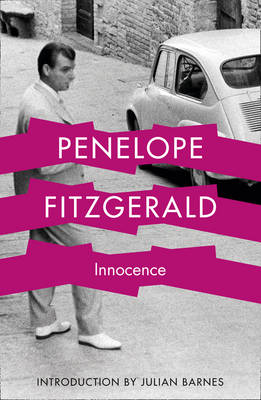
Penelope Fitzgerald’s sixth novel Innocence (1986) concerns the Ridolfi, a family of quietly dignified, denuded Florentine aristos who trace their lineage back to the sixteenth century. It opens with the story behind “the Dwarfs”, a group of statues that crown the family residence, Villa Ricordanza. “Strictly speaking they are not dwarfs, but midgets…pathologically small, but quite in proportion”, and they bear witness to the grotesque, heartbreaking tale of the Ridolfi’s midget forebears who decided that their daughter Gemma should remain ignorant of her own smallness. Thus these early Ridolfi modified the villa’s architecture, employed only little people, and erected the statues. Eventually, the Count reasons that Gemma “would be better off if she were blind…And since there seemed no other way to stop her going up and down the wrong staircases, it would be better for her, surely, in the long run, if her legs were cut off at the knee.”

Image credit: HarperCollins

Most readers would prefer not to believe it, and Fitzgerald lets us turn aside if we so choose: “This story is not the one given out nowadays in the leaflet provided by the Azienda di Turismo”. But though the novel settles into a stiller, sadder key, this nauseous moment is not the last. One of the few non-Ridolfi characters is the angry young southern doctor Salvatore Rossi, who has left his native hole, Mazzata, to practise his trade in Florence. An early chapter flashes back to his ten-year-old self, accompanying his father on a pilgrimage to Antonio Gramsci, Comrade Nino, effectively a prisoner in Mussolini’s Rome. Gramsci’s body is decaying, his ideals are decayed: the former repels Salvatore, and the latter destroys his father. “On that afternoon he [Salvatore] decided that as soon as possible he would be emotionally dependent on no one.”

Thus Innocence arrives at the classic rom-com setup, the gamophobic bachelor whose non-marriage vows are upended by a singular woman. Yet the reader is hard-pressed to find much singular about Chiara Ridolfi, the half-American daughter of the wearily splendid Count Giancarlo Ridolfi – not really a count, “although the leaflet calls him that, because all titles were abolished in Italy after the Second World War”. It is 1955 and Giancarlo is wondering how to take his daughter’s news, namely that she is to wed Dr Rossi. Then we rewind to the moment when the couple met, a musical evening at the Teatro della Pergola:

   Chiara gave the doctor her hand.
   ‘You enjoyed the Brahms?’ he asked.
   She looked at him politely, but in wonder.
   ‘Of course not.’
   Perhaps we might agree about everything, Salvatore thought. No-one ever agrees with me, but she might…a young girl wearing a diamond necklace…as if she didn’t know how she had it on, and quite without the elegant gesture, the Grace Kelly gesture, of lightly touching the jewels with one hand. Perhaps this young woman didn’t know how to be elegant, or perhaps Grace Kelly didn’t. He felt deeply irritated. He had an intimation that he was lost.

Chiara’s candour gets through to Salvatore, who has no idea what to do with his furtive new emotions. When she tries to catch him after work, he bawls and screams her out of his practice; he takes a mistress and tries to shag his feelings away. Chiara, meanwhile, enlists her bulldozing English friend Lavinia ‘Barney’ Barnes to run as a go-between, and Barney pretty soon comes to the same conclusion as us. “I’m not at all sure that Cha ought to marry this man”, she tells Chiara’s silent farmhand cousin, Cesare.

When part 2 opens, however, Chiara and Salvatore are married. Fitzgerald cannily spares us the thaw, showing her magisterial instinct for scene-shifting. Innocence is a cinematic novel: some chapters run to ten pages, some to two paragraphs, never longer than they need to be. And it gets the Florentine detail absolutely right, without ever laying it on thick. ‘Why doesn’t Florence have a proper airport?’ Barney demands, still a valid question in 2021. Yet somehow Fitzgerald’s Florence feels older than 1955, almost Edwardian. The book strikes a similar note to Lampedusa’s The Leopard – they’re both wry, painful, gorgeous novels of fading glories, of old orders crumbling to modernity. Count Giancarlo Ridolfi shares some of Don Fabrizio’s magnificence; he just wears it much more lightly.

For Innocence has that quality of lightness that Italo Calvino thought a writer’s greatest possible virtue. It’s something to do with the prose, which punctures any character – usually Salvatore – who takes themselves too seriously. Of Salvatore’s pre-marital mistress:

This hair of Marta’s was somewhere between blonde and brown, a colour which, Marta’s sister continued, rapidly drove men mad. Franca claimed the right to say these things, presumably, by right of seniority and of possessing the experience of marriage, although it was pretty clear that Dr Rossi was not being driven mad in the least and that Franca’s experiences in the Empire style matrimonial bed were not very different from Marta’s in the top room.

The funniest line is never the punchline; it’s always tucked in somewhere before. It’s not “Franca’s experiences”, it’s the clause just prior to that. This is what I mean by the prose’s lightness: Fitzgerald never pauses in expectation of a laugh. The same is true of Salvatore’s walk along the river Arno with the even-tempered Dr Gentilini, also a non-native:

He glared at the umber-coloured river, sunk to its lowest point. ‘Note that it’s not much more than a gutter, this Arno of yours, a gutter between the hills.’ Gentilini, to whom this was addressed, replied that it wasn’t his Arno, and that in the Po valley they found it much cheaper and more practical to put up with the floods and give up prevention altogether. He himself would never have been able to start out on a medical career if it hadn’t been for the flood compensation his family received in 1924.

Salvatore is usually snarling like this, and few readers will root for him. Instead, it’s the tenderness between Chiara and Barney that glues the novel together, especially when the latter, who seems invulnerable, opens herself up to Cesare. She has met him twice before, most recently at Chiara’s wedding, where she helped him carry the overcome Signora Gentilini out back.

    ‘I’ll tell you what it is,’ said Barney. ‘It won’t take long, because I know exactly what I want to say. I’ve been thinking it over for some time. As far as I can see, all Italian men get married, unless they’re… Right, well, as far as you’re concerned, I’m prepared to marry you right away…Now I’m getting to the real point. I want you to listen to me carefully. I’m in love with you. I love you.’ 
    ‘Yes,’ said Cesare.

by Harry Cochrane

Innocence is published by HarperCollins and is available here.

John Berryman – John Berryman (Poet to Poet Series)

I’ve owned this slim little book for nearly seven years, and it still has the paper price tag on the back: £3.99. Those were the days. I bought it after a night of undergrad boozing chez my friend Tristram, whose bookshelves I had combed in conspiracy with another friend, Thea. Thea pulled out this very edition of John Berryman – I remember being struck by the stack of shot glasses on the cover – and told me that I had to read him. The Dream Songs especially.

Credit: Faber and Faber

And though 58 Dream Songs (chosen from 385 of them) make up about three-fifths of the book, it was Berryman’s sonnets that I first latched on to. At this point in life I was devoted to poetic form, slavishly so, and that devotion struggled to find a place for The Dream Songs’ histogrammic six-line stanzas, sometimes rhymed and sometimes not. The sonnets attracted me by virtue of their shape – time was when everything I wrote was a sonnet – but they were sonnets with a voltage that I had rarely felt:

All we were going strong last night this time,
the mots were flying & the frozen daiquiris
were drowning, supine on the floor lay Lise
listening to Schubert grievous and sublime,
my head was frantic with a following rime:
it was a good evening, an evening to please,
I kissed her in the kitchen – ecstacies –
among so much good we tamped down the crime.

The weather’s changing. This morning was cold,
as I made for the grove, without expectation,
some hundred sonnets in my pocket, old,
to read her if she came. Presently the sun
yellowed the pines & my lady came not
in blue jeans & a sweater. I sat down and wrote.

For years I wished that the book gave me more than a tiny window onto Berryman’s sonnets (21 out of 115), but over time I have come to think Michael Hofmann’s selection near-faultless. It’s surpassed only by his introduction, possibly the finest poet-to-poet preface that I’ve ever read. Hofmann admits that “any selection of Berryman has, to some extent, to oppose itself to the worst tendencies of the poet. There will be a little denial in it, and a little false innocence”. Otherwise one gives too much space to Berryman’s most irresponsible speech-acts, like this:

The artist is extremely lucky who is presented with the worst possible ordeal which will not actually kill him. At that point, he’s in business… being knocked in the face, and thrown flat, and given cancer… I hope to be nearly crucified.

Berryman suffered the worst possible ordeal at the age of eleven, when he saw his father walk out into the garden and shoot himself in the head. The sins of the father did not die with him: instead, the son inherited the urge to self-destruct. This translated into alcoholism, the extra-marital affair chronicled in the sonnets, and finally his own suicide, when he jumped from a bridge over the Mississippi.

Those catastrophic tendencies find voice in the Dream Songs’ protagonist Henry, who comes and goes, twirling around Berryman’s own biographical trajectory. But whether writing about his own implosions or the implosions of others, Berryman usually resists (self-)pity, which of course makes him the more harrowing. The Dream Songs include a handful of elegies for Delmore Schwartz, the Brooklyn poet who crashed and burned and became an Adonian martyr figure among Berryman’s circle, inspiring the title character of Saul Bellow’s Humboldt’s Gift. In Dream Song 149, however, grief is “too astray [perhaps in the sense of ‘wild’] for tears”:

This world is becoming a place
where I do not care to be any more. Can Delmore die?
I don’t suppose
in all them years a day went ever by
without a loving thought for him. Welladay.
In the brightness of his promise,

unstained, I saw him thro’ the mist of the actual
blazing with insight, warm with gossip
thro’ all our Harvard years
when both of us were just becoming known
I got him out of a police-station once, in Washington, the world is tref
and grief too astray for tears.

I imagine you have heard the terrible news,
that Delmore Schwartz is dead, miserably & alone,
in New York: he sang me a song
‘I am the Brooklyn poet Delmore Schwartz
Harms & the child I sing, two parents’ torts’
when he was young & gift-strong.

The poem is studded with allusions to the greats. “Can Delmore die?” picks up Shakespeare’s “Can Fulvia die?” (Antony and Cleopatra), while “Harms & the child I sing” grotesquely inverts the opening three words of Virgil’s Aeneid: “Arms and the man I sing” (arma virumque cano). But the poem’s pathos plays along the language of dead platitudes: “I imagine you have heard the terrible news”. And “his promise” – at how many funerals has the inadequate word ‘promise’ been trotted out? Perhaps the saddest thing, which anyone who has read Humboldt’s Gift will recognise, is that Delmore died “miserably & alone”, deserted not only by his friends but also by his talent. “When he was young” he was “gift-strong”, but his gift, like Humboldt’s, abandoned him in later life. In the next Dream Song, #150, Berryman writes “I’d bleed to say his lovely work improved / but it is not so”.

For his part, Berryman pre-empted a similar decline by sabotaging his own poetic praxis. Love & Fame (1970) reads like a man who has given up trying to make sense of life and is content to laugh at it; certainly, he’s stopped trying to shape it to a real form – the book’s quatrains seem token, almost a mockery of the verse tradition. As one Dream Song says, “These Songs are not meant to be understood, you understand. / They are only meant to terrify and comfort”, a gloss that probably applies to most of the Berryman corpus. After all, what is there to understand in the opening ‘stanza’ of ‘First Night at Sea’?

I’m at a table with Canadians.
He translates Villon. Villon! What Canadian
could English make of those abject bravura laments?
He says he’ll give me a copy.

But reading with the hindsight of an age when most poets are ‘prosey’ at one point or another, these poems have a power of their own. They involve some cognitive leaps that the reader can only hope to keep up with, but they speak with a plainness alien to much of Berryman’s oeuvre, not least the sonnets. No one could call them disciplined, and my recent purchase of Berryman’s Collected Poems (everything except The Dream Songs) has shown me how uneven his body of work is, an unevenness that Hofmann does a fine job of hiding. When you have access to all the sonnets, you realise that they’re riddled with ellipses, which in my view represents a failure of syntax. Indeed, most of Berryman’s poems smack of something unfinished, unconsummated; however astonishing they are, very few of them invite the word ‘perfect’. One that might, though, is Dream Song 145:

Also I love him: me he’s done no wrong
for going on forty years – forgiveness time –
I touch now his despair,
he felt as bad as Whitman on his tower
but he did not swim out with me or my brother
as he threatened –

a powerful swimmer, to      take one of us along
as company in the defeat sublime,
freezing my helpless mother:
he only, very early in the morning,
rose with his gun and went outdoors by my window
and did what was needed.

I cannot read that wretched mind, so strong
and so undone. I’ve always tried. I – I’m
trying to forgive
whose frantic passage, when he could not live
an instant longer, in the summer dawn
let Henry live on.

That brutal, tight-lipped terseness, “did what was needed”. And the compression – not “I’m trying to forgive him / whose frantic passage”; just “I’m trying to forgive / whose frantic passage”. No words more than necessary, as necessity is the argument that Berryman puts for his father, who “could not live an instant longer”. It relieves his father of the guilt of choice, perhaps so the son can lay the questions to rest. All attempts to “read that wretched mind” have failed, though “I’ve always tried”. Is there a poem more simple and devastating?

Well, maybe. Maybe the last poem in this little book:

He Resigns

Age, and the deaths, and the ghosts.
Her having gone away
in spirit from me. Hosts
of regrets come and find me empty.

I don’t feel this will change.
I don’t want any thing
or person, familiar or strange.
I don’t think I will sing

any more just now;
ever. I must start
to sit with a blind brow
above an empty heart.

by Harry Cochrane

Kate Clanchy – How to Grow Your Own Poem

How to Grow Your Own Poem is a title well chosen. It pops the myth of ex nihilo creation, which as Kate Clanchy repeats throughout the book, is not how people write poetry. It invokes Keats – if poetry does not come like leaves to a tree, it had better not come at all – and it puts poetry right in the ecosystem, a breathing and pulsing kingdom of life. If the poet, the title implies, gives words the care and nourishment that a gardener gives their garden, a poem will naturally result.

Clanchy believes in composing poetry as ‘a fundamental human activity…something we need to do and of which, even more than dance and music, we are deprived in the modern world.’ Hence the ‘Permission to Write’ sections, intermittent pages of sedative prose to help the reader/writer bypass their personal ‘shit detector’, as Hemingway called it but Clanchy doesn’t. Generally, though, there is very little holding forth across the book’s seven chapters, which share a broadly similar structure. Here’s a poem; here’s what it’s doing; here’s a prompt; now it’s your turn. The exempla come from poets alive, dead and undiscovered, as Clanchy’s own students, some of them not yet into their teens, see their work set alongside the Audens, Duffys and Armitages. The comparison is often to their credit.

Image Credit: Macmillan

The cues and exercises in How to Grow Your Own Poem tap into the primal, rhythmic impulse in all of us, the urge to shout and chant while stomping a foot. One of the first tasks revolves around Edwin Morgan’s ‘A View of Things’:

what I love about dormice is their size
what I hate about rain is its smear
what I love about the Bratach Gorm is its unflappability…

When Morgan’s finished, it’s ‘Your Turn’, a fixture in every chapter. Clanchy has her reader use Morgan’s poem as an ‘ion engine’, while ‘making sure that all your details are real and concrete and come from your own experience’. She then shows us how her sixteen-year-old student Han Sun Nkumu responded:

    …What I love about long drives is stopping for coffee
What I hate about love is that it is undeniable
What I love about love is that there is no maths involved

After which we might wonder who really should have been the Scottish Makar.

How to Grow Your Own Poem is without doubt the ‘practical book’ that Clanchy wanted. But if she puts admirable trust in the student-poet’s ear, she stakes very little on their boredom threshold, fighting almost pathologically shy of verse mechanics. Her advice generally holds for all poets, whether unestablished or establishment: it is always worth being reminded that ‘poems have plots’. But the poet in love with their craft, the poet who could talk about poetry’s cogs and tunings all day, will be disappointed by a subchapter called ‘Couplet Island’ in which Rumi is translated into distichs without rhyme or repeated rhythm: hardly couplets. When Clanchy does broach the term ‘iambic’ she questionably explains it as ‘limping’, and declines to scan a single iambic line to illustrate her point.

Thus How to Grow Your Own Poem diametrically opposes Stephen Fry’s The Ode Less Travelled, where poetic form is treated with crusading zeal and bouncing nerdery. Quite apart from delighting verse mechanophiles with the expected Frydian brio, the latter makes for a more recognisable read than Clanchy, who eschews such passé units as the paragraph. This often sinks her into the annoying habit of hitting enter before each new sentence, but sometimes it makes a point. ‘It often helps me to think of the white space as enormous. / As all of time and all of space. / Infinitely big, and very cold. / My sentence is a moon buggy across endless frost’. And so on. It’s another example of Clanchy giving us an example. How to Grow at least makes us think seriously about the difference between poetry and prose, a difference that can be reduced to nothing so facile as formatting.

As a primer, the book is still a little too primary school, appealing to our poetic instinct but to none of our curiosity. It makes no apologies for its classroom origins, however, and in the classroom it will find its true calling. We can riff on Morgan’s listicle at home, finding all sorts of weird reasons behind our loves and hates, but our poem will feel incomplete until we share it with someone else. Composing poetry may be a private activity, but Clanchy never lets us forget that it always demands an audience.

by Harry Cochrane